
Household expenses continue to rise, and many homeowners are looking for ways to cut costs. One increasingly popular option for reducing energy costs is smart home technology, which is often promoted as a simple way to reduce energy use and save money. But you may be asking yourself if smart home technology is really worth the investment. While smart home technology is generally beneficial, it certainly has its pros and cons.
How Smart Home Technology Can Help You Save
Smart home technology can support your household in several ways, with energy efficiency often providing the biggest potential savings.
In the kitchen, refrigerators are typically among the largest electricity users. A smart refrigerator may help lower your monthly bill by running more efficiently and maintaining more accurate temperature settings. Before purchasing any appliance, look for the ENERGY STAR designation, a federal certification for products that meet energy efficiency standards.
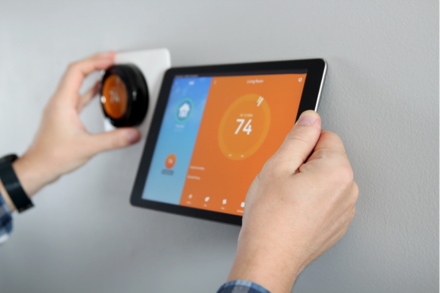
Other tools, such as smart thermostats and programmable lighting, can also help reduce energy use. Smart thermostats let you adjust your home’s temperature from your phone, making it easier to turn down the heat or air conditioning when you’re away.
Programmable lighting can provide similar savings by turning lights off at scheduled times or when a room is not in use, helping avoid unnecessary electricity use.
When Convenience Can Become Costs
Many households use smart assistants, such as Alexa or Google Home, because they are convenient and easy to use. However, these devices often remain in standby mode around the clock, using electricity even when they are not actively being used. Smart technology and appliances can also come with higher up-front costs, so it’s important to weigh the purchase price against potential long-term savings. For example, a Google Nest smart thermostat retails for about $220. In comparison, a basic Honeywell thermostat that is not “smart” will run you about $35. The cost may seem small at first, but it can add up over time.
Is Smart Home Technology Worth It?
For many households, smart home technology can be a worthwhile investment, especially when it helps reduce energy use through tools like smart thermostats, programmable lighting, or efficient appliances. However, it is important to look beyond the convenience factor and consider the full cost, including the up-front purchase price, ongoing electricity use, and whether the device will realistically fit your household’s needs. The best value often comes from choosing smart technology that directly supports energy efficiency rather than buying devices simply because they are new or popular. By comparing costs, looking for ENERGY STAR-certified products when available, and using smart features consistently, homeowners can make more informed decisions and increase the chances that these upgrades will pay off over time.
To find more ways to save on your energy costs, visit NOPEC’s Energy Savings Center.